


WMATA has scored a win with taller gates, but limited changes in each improvement have made benefits stepwise and not transformational. The 1,200 taller gates have reduced the worst of the peak-Coronavirus fare evasion. However, the choice to install incrementally better faregates has muted them from being an unqualified success. Rather than beating evaders at the gate, riders have ended up paying twice for marginally better gates and still paying for manual enforcement by MTPD.
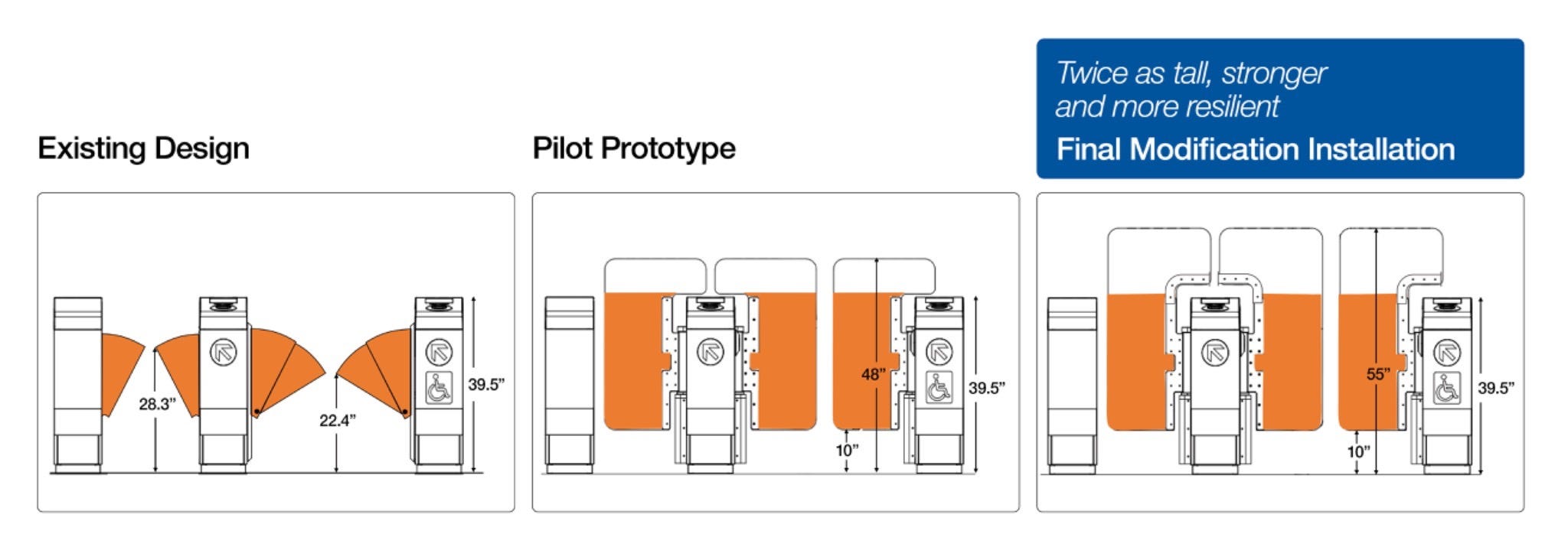
WMATA updated faregates [Left: before, Right: after]
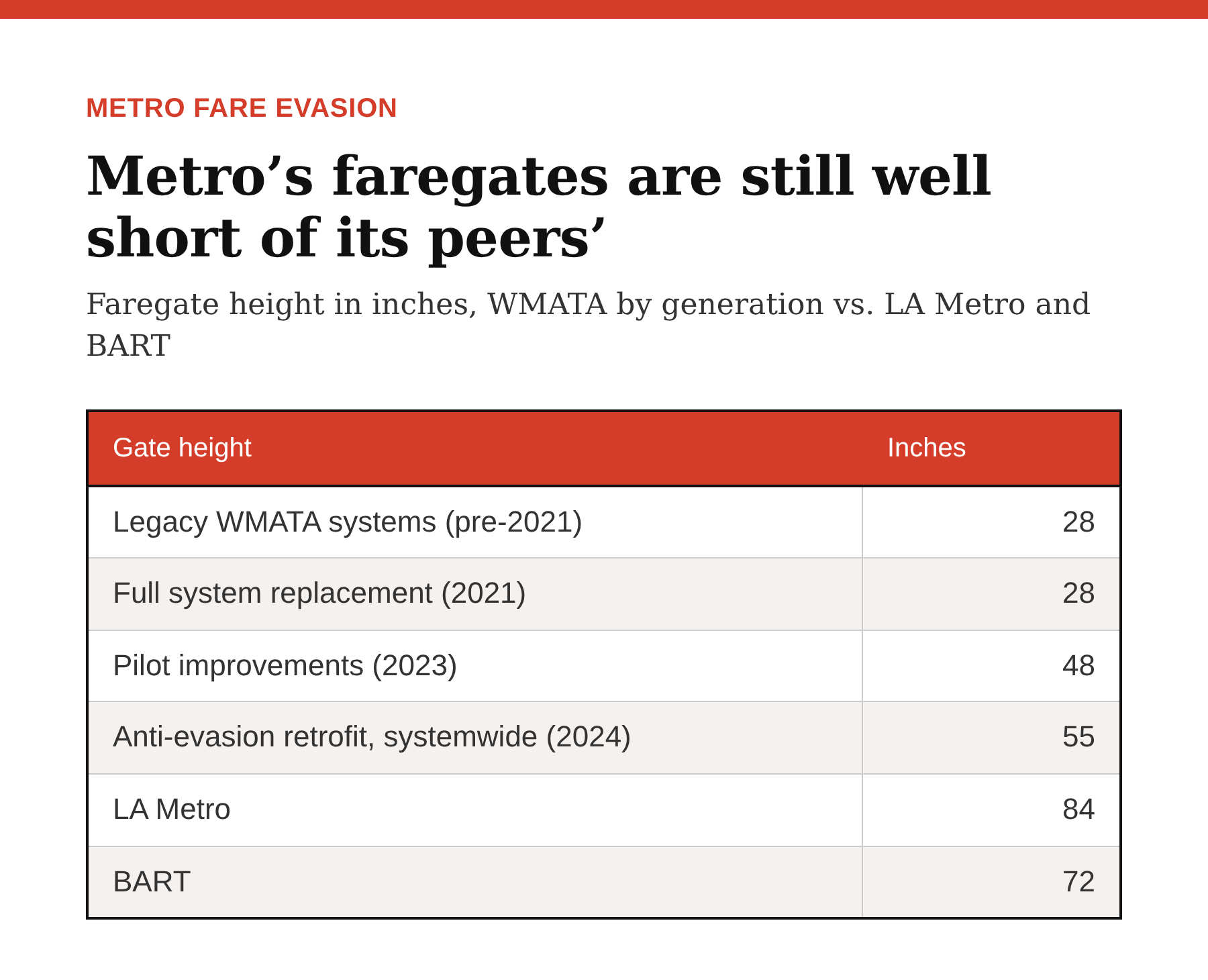
WMATA vs. peer transit systems
When WMATA decided to replace gates the first time in 2021 under previous General Manager Paul Wiedefeld, it was quickly deemed a failure due to their lack of successful hardening and physical blocking. Thus, the gate system eventually received multiple rounds of fixes rather than one big refresh in 2021. While each of these were better than what proceeded, they failed in that both major purchases were incremental. The current gate height stands at 4.6 feet, which is still shorter than the 6- and 7-foot systems recently installed at BART and LA Metro respectively.
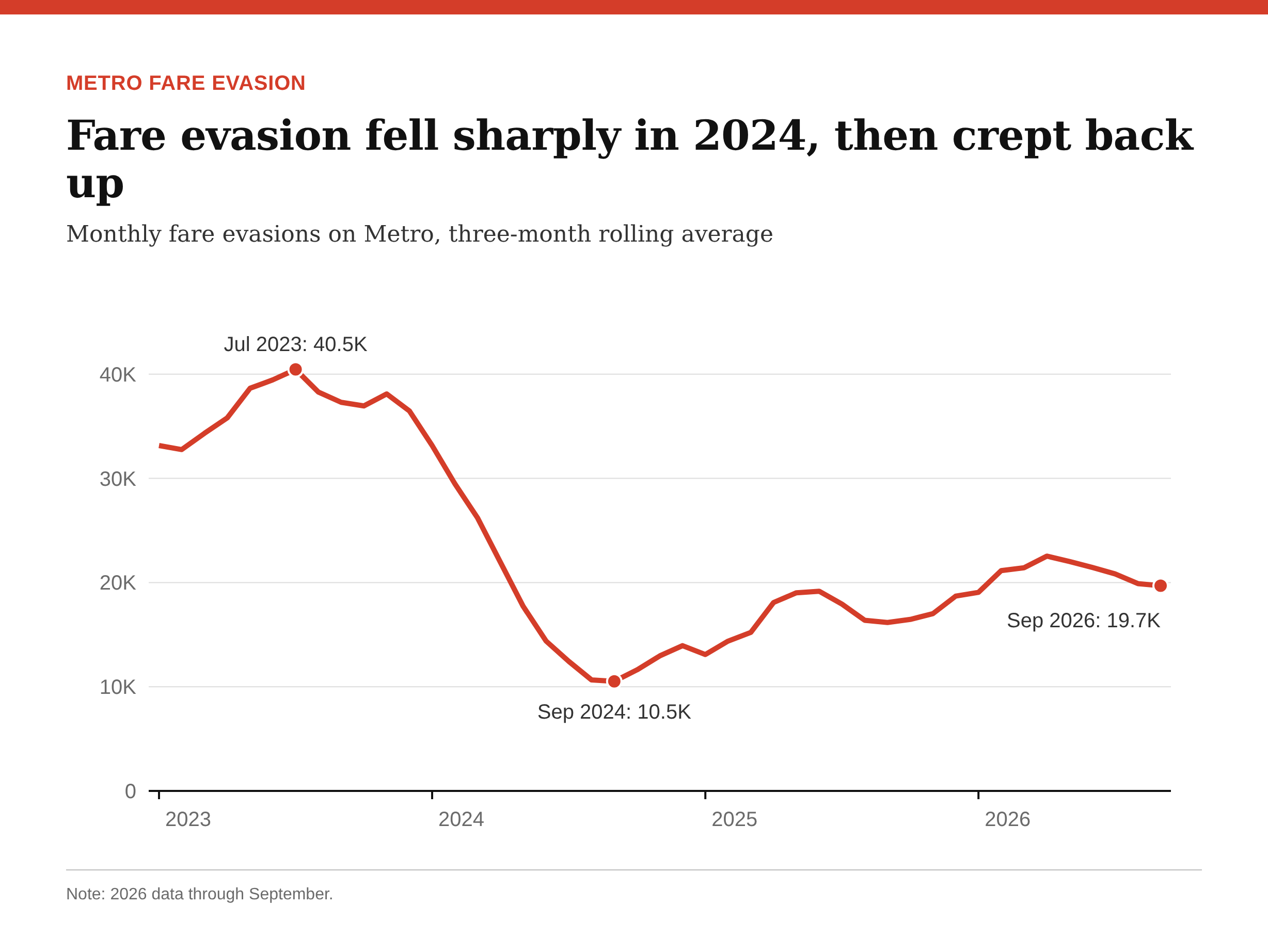
It is one thing to make a bad purchase, or a flawed pilot. However, making a bad fleetwide purchase, learning the flaw in it, and then replacing that with something still not fit for purpose is indicative of poor planning. Even after a systemwide faregate replacement and a major systemwide retrofit, fare evasion in 2026 is above every single month of the year prior.
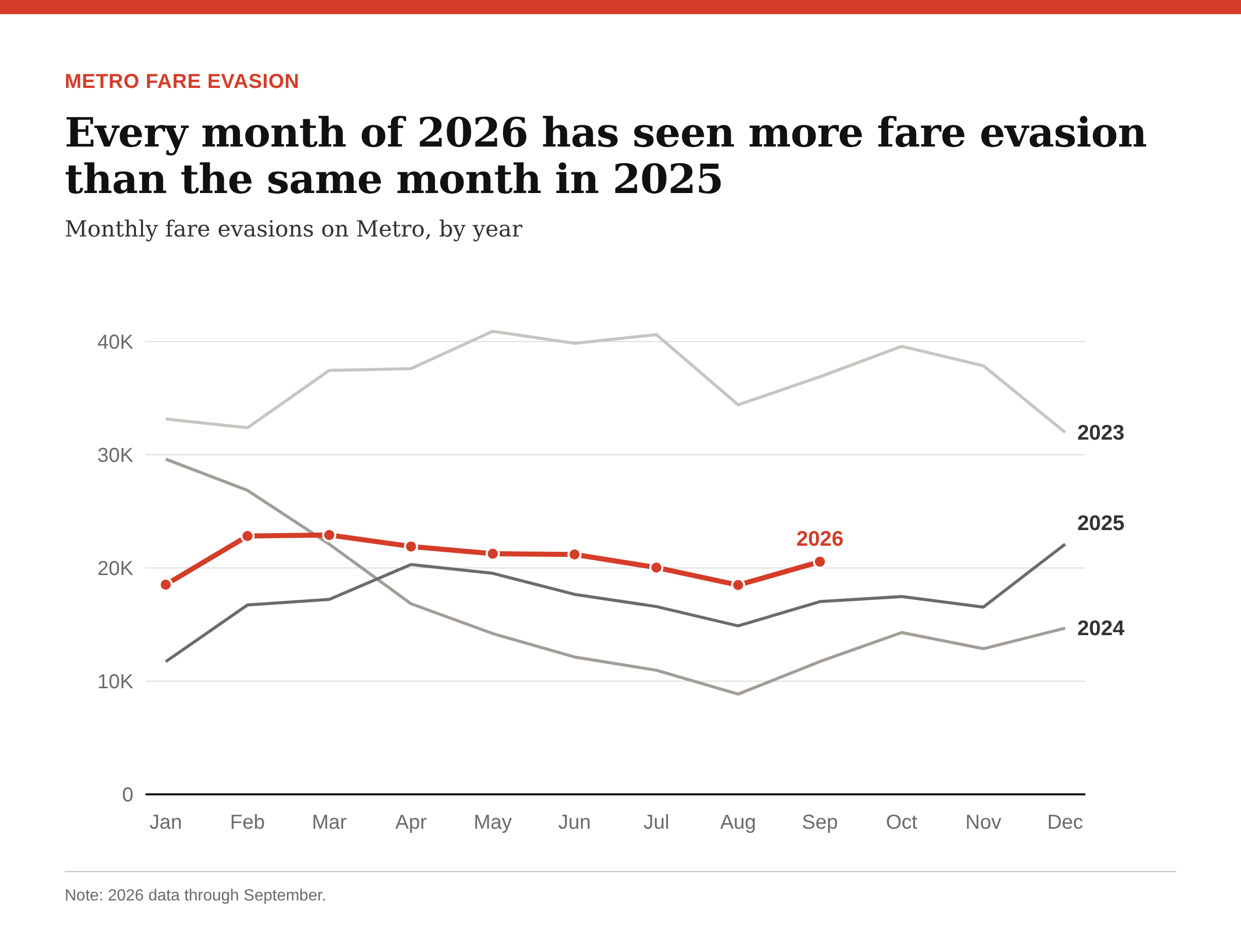
Standards of success
Some purport that we should be happy with incremental reductions in evasion, such as the big fall-off since the peak of the pandemic. However, the strategy of acquiring incrementally better gates that are partially effective has been costly, and necessitated the continued use of WMATA Special Police to enforce fare evasion on an hourly basis.
While police presence will always be required on transit to address fare evaders with weapons or outstanding warrants, or respond to violent crime. Nonetheless, harder gates would reduce the need for routine fare enforcement work like issuing citations. Station managers explicitly do not enforce fare evasion given the potential threat of violence. This swap in how police are used ultimately lets police concentrate on what matters most.
Between the cost of additional police resources, crime committed by people who never even tapped in, and continual tinkering with gates below what other transit systems are purchasing, bad gates are a bad policy.
Higher quality gates reduce evasion over the long term, and have the straightforward potential to save money both from increased fares and decreased costs.
Given that WMATA purchased from the very same manufacturers that BART and LA Metro used, there is a very real chance that the same purchase will have to happen three times to get what could have been purchased initially.
Strategies to reduce evasion without full replacement
Although the series of decisions that led to two gate replacements within a five year span are tragic, there is still a good case to be made that hardened gates could make a difference where fare evasion is most prevalent.
Given that the average station only has around 200 instances of evasion on a weekday, going after the highest traffic stations would be a simple strategy to have high impact without a full replacement. Stations like Union Station, Gallery Place, and Metro Center with seven hundred to one thousand people evading payment would help discourage evasion without necessarily putting a new gate at every entrance and exit. When people hop the gates in Rockville or Reston, they would face the impossibility of exiting without payment in Metro Center.
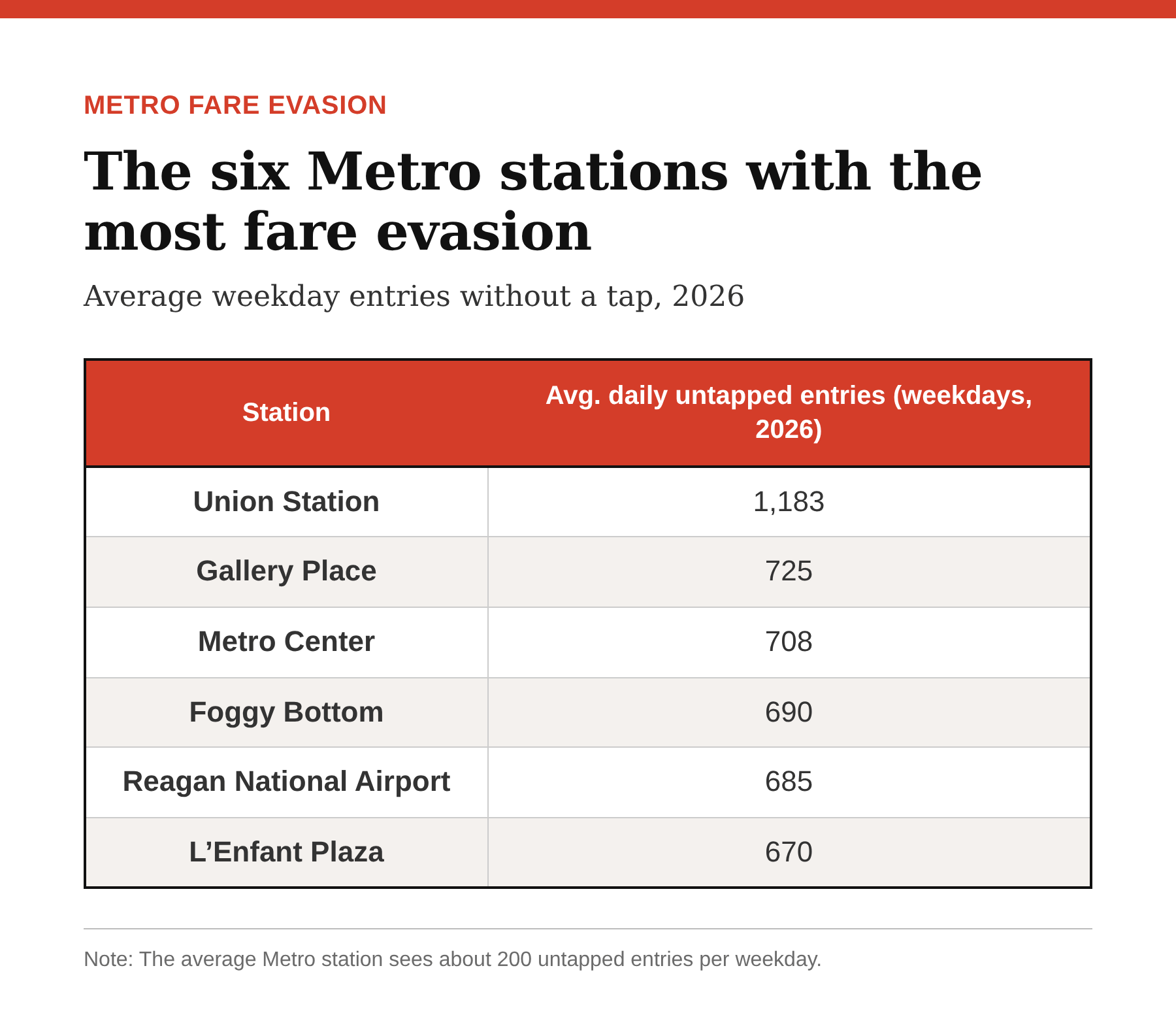
Although for some stations like Gallery Place there are alternatives to exit in, for stations like Reagan National Airport this would be much less feasible.
The clear ROI of improvements
If efficiency and good stewardship are important to WMATA, state of the art gates are necessary. Rather than tackling this problem for good with a maximalist gating strategy, WMATA ended up purchasing two sets of ineffective gates. The result? Stations like the newly built Dulles Airport station have more than twelve percent of their riders not paying at all.
For an alternative strategy, high-tech and nearly unjumpable gates would pay dividends around the clock. This differs from the current strategy of having MTPD staff stations with multiple police officers to issue tickets that will have the majority of them in DC thrown out.
The bureaucratic inertia of MTPD enforcement feels good, but ultimately subverts the solution of having better gates that work every single second that Metro is open.
Given that focusing on a few stations that are either key destinations with high traffic or have few alternatives, this could quickly help reduce evasion and help MTPD resources be used more effectively.

Thanks for this article.
The data I would like to see is that which supports your premise: "high-tech and nearly unjumpable gates would pay dividends around the clock."
Is there any data that shows an increase in fare revenue (or a decrease in operating expenses exclusive of additional enforcement) for a train system that installs harder gating?
My guess is the data would show a curve of diminishing returns of revenue improvement and/or enforcement expense reduction as a municipality spends more on hardening gates, and maybe DC is best served by status quo with the gates while quietly phasing out other enforcement expenses to improve the bottom line.
What caused such ineffective purchases to be made the first two go-rounds?